
The program removed 550 tons of dry material from the two lagoons.
Case study · Municipal & utility
De-sludging and dewatering of two municipal sewage lagoons in Hardisty, Alberta
The numbers behind the cleanout
One clear-water loop, and the clay base stayed intact.
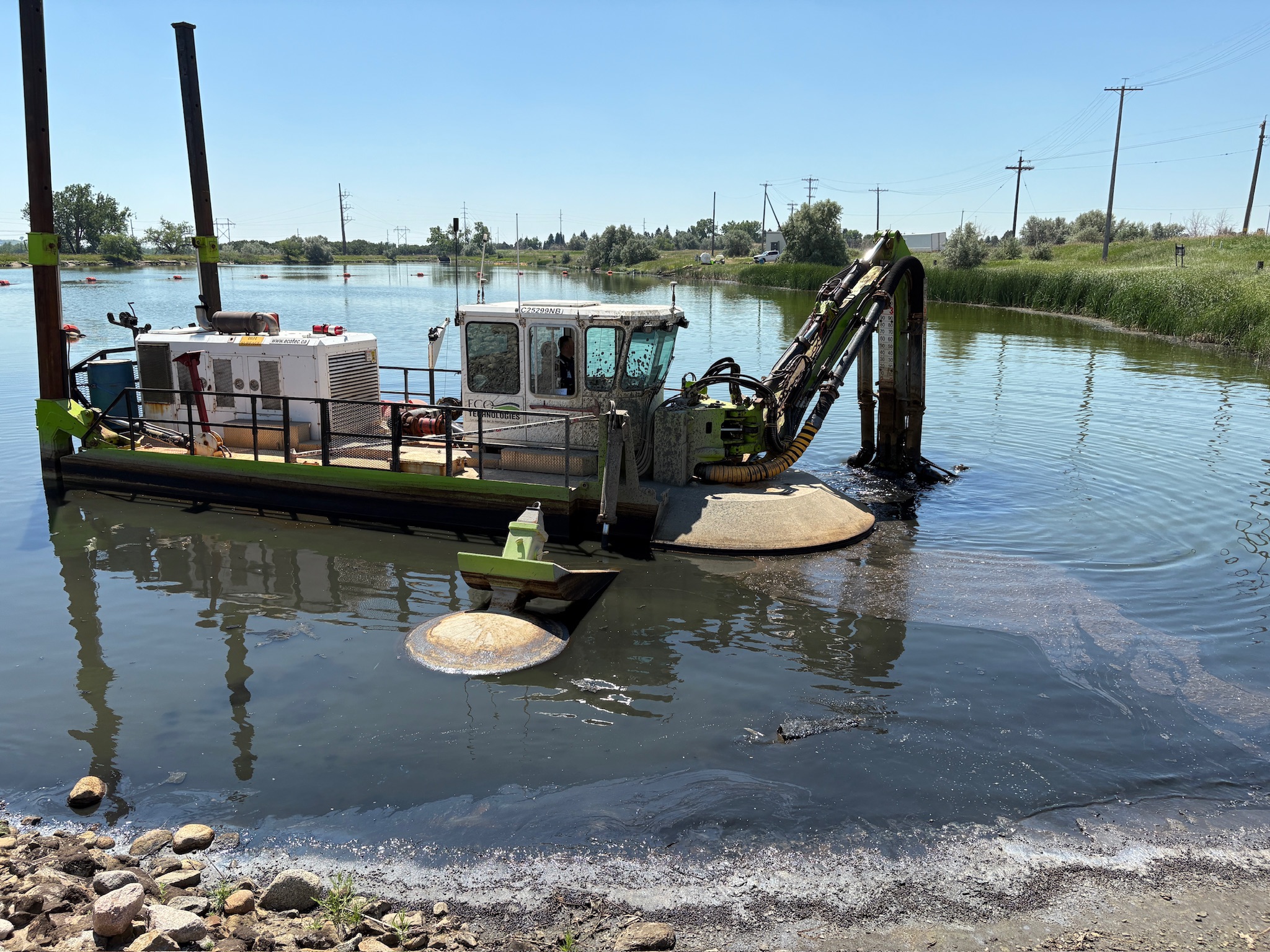
S3S was contracted to de-sludge two anaerobic sewage lagoons in Hardisty, Alberta. A clear-water loop, centrifuges, and polymer conditioning pulled dry material out of the lagoons while protecting the clay base underneath, and recirculated clean water without adding contamination.
Every figure here comes from the Hardisty, Alberta lagoon project: two anaerobic sewage lagoons untouched since the 1970s, de-sludged without adding contamination to the water going back in.
The dewatered material reached an average solids content of 33%.
Every batch of dry material passed its paint filter test.
Challenge, solution, result
De-sludging two lagoons without disturbing the clay base.
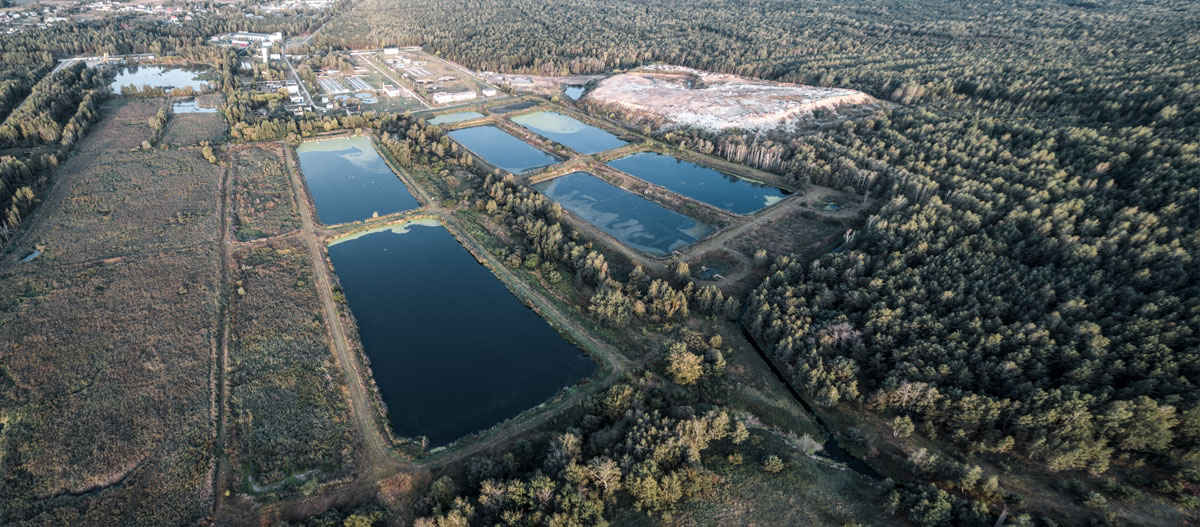
Two anaerobic sewage lagoons in Hardisty, Alberta had not been processed since the 1970s. S3S needed to dry the accumulated solids, protect the clay base underneath, and return clean water to the loop without adding contamination.
Challenge
Decades of sludge, over a clay base that had to stay intact.
The two lagoons had gone untouched since the 1970s. Any de-sludging plan had to dry the solid material, protect the clay base underneath, and recirculate clean water without adding contamination to the lagoon.
2Anaerobic sewage lagoons untouched since the 1970s
Solution
A clear-water loop, centrifuges, and polymer conditioning.
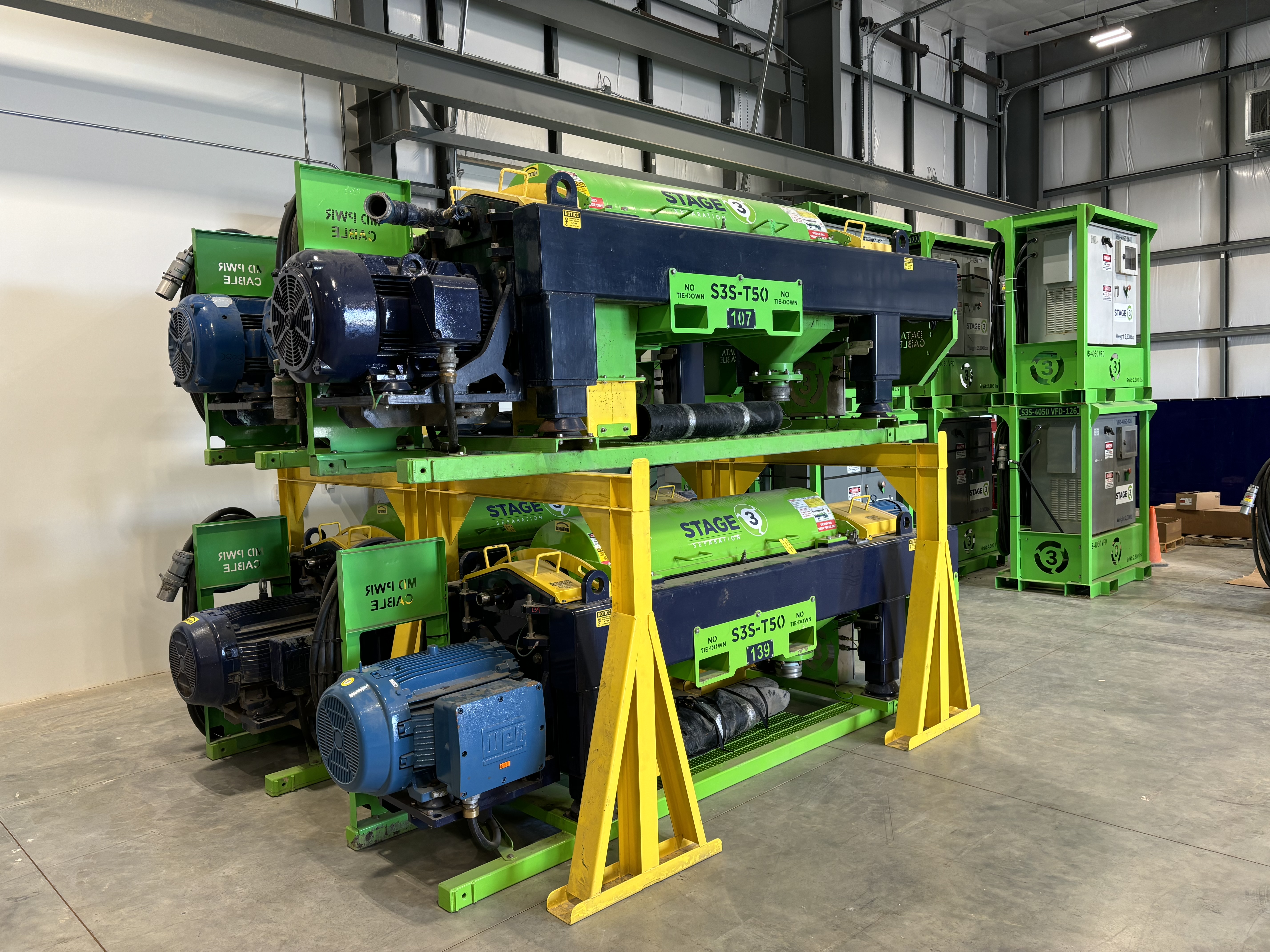
S3S built a system around a clear-water loop. Centrifuges and polymer conditioning dewatered the sludge, a BOS III tank managed the recovered water and polymer mixing, and dry material went out by conventional end-dump loadout.
Result
550 tons of dry material out, and the water stayed clean.
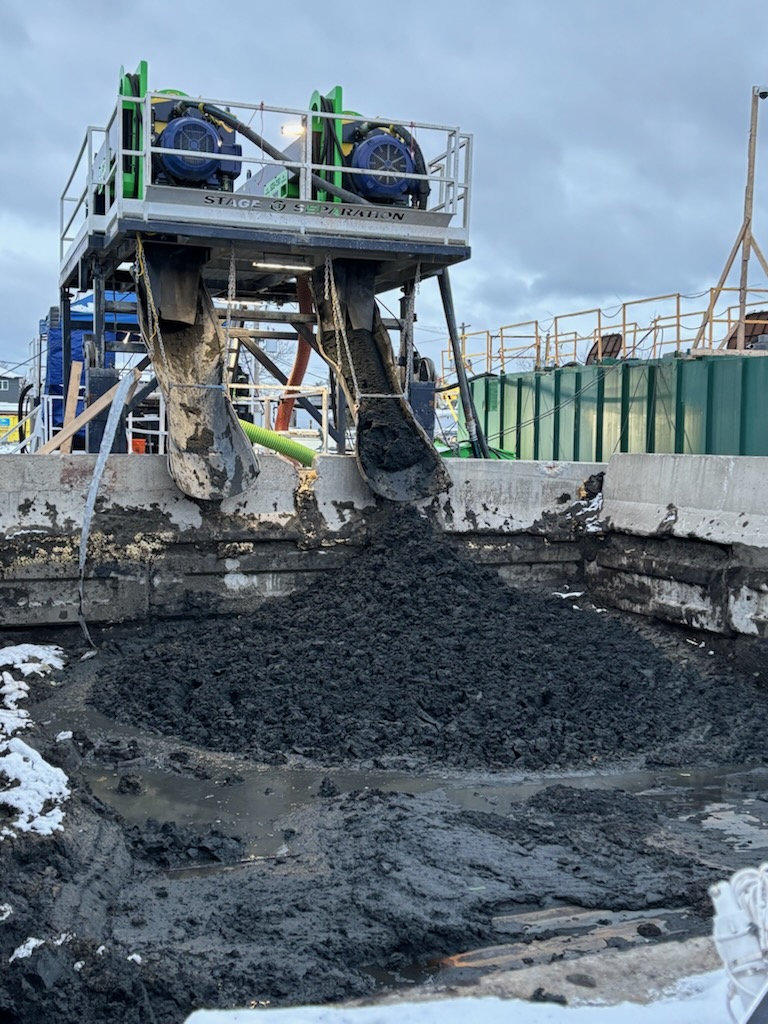
The program removed 550 tons of dry material from the two lagoons, at an average solids content of 33%. Every batch of dry material passed its paint filter test, and clean water went back into the loop without adding contamination.
550 tonsDry material removed
Process sequence
From lagoon sludge to a manageable solids stream.
The system kept feed, fine-solids conditioning, dewatering, water reuse, and loadout connected in one managed sequence.
01
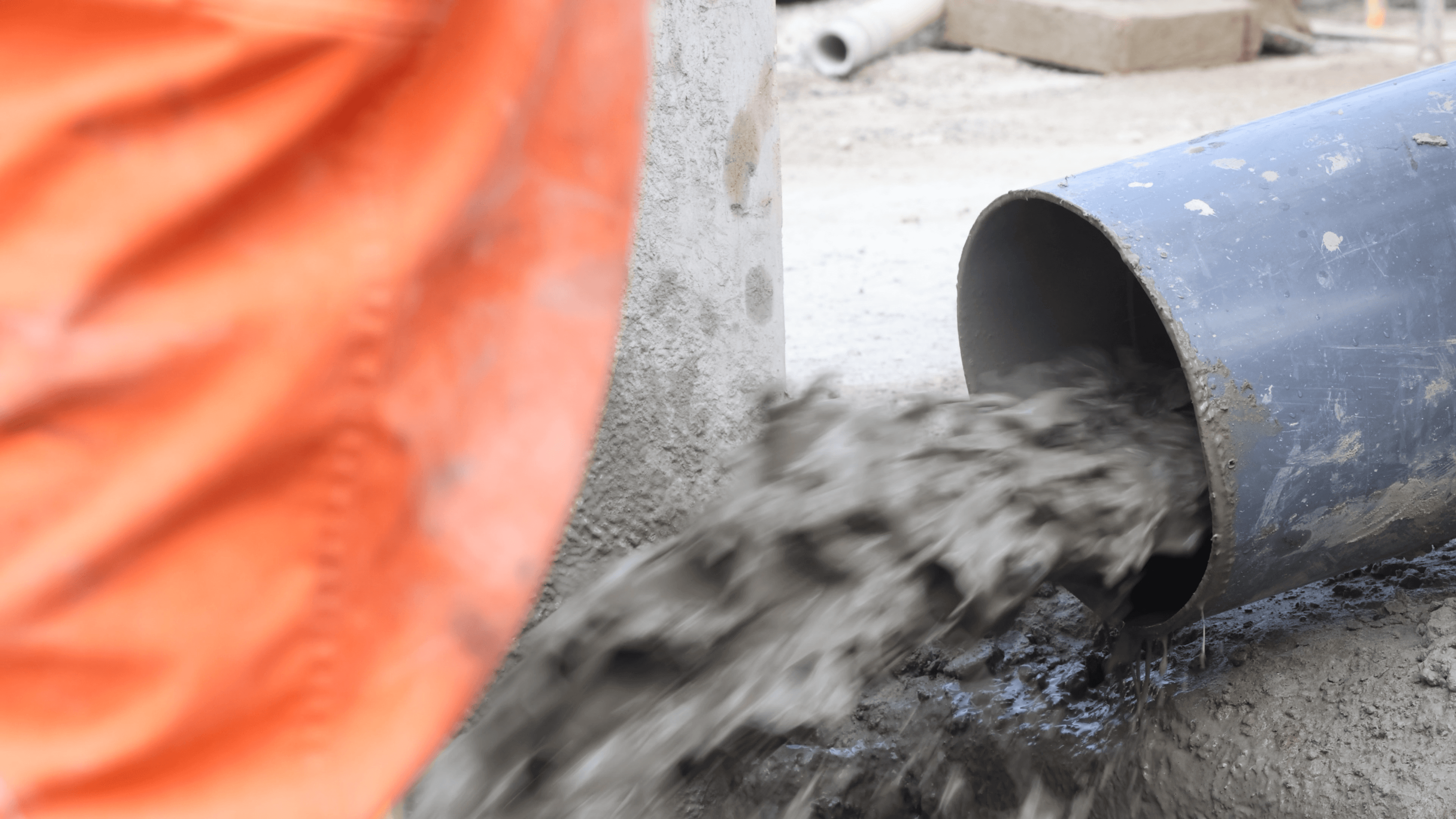
Pump sludge to the receiving manifold
A pond slurry pump moved lagoon sludge to the receiving manifold for controlled transfer into the treatment system.
02
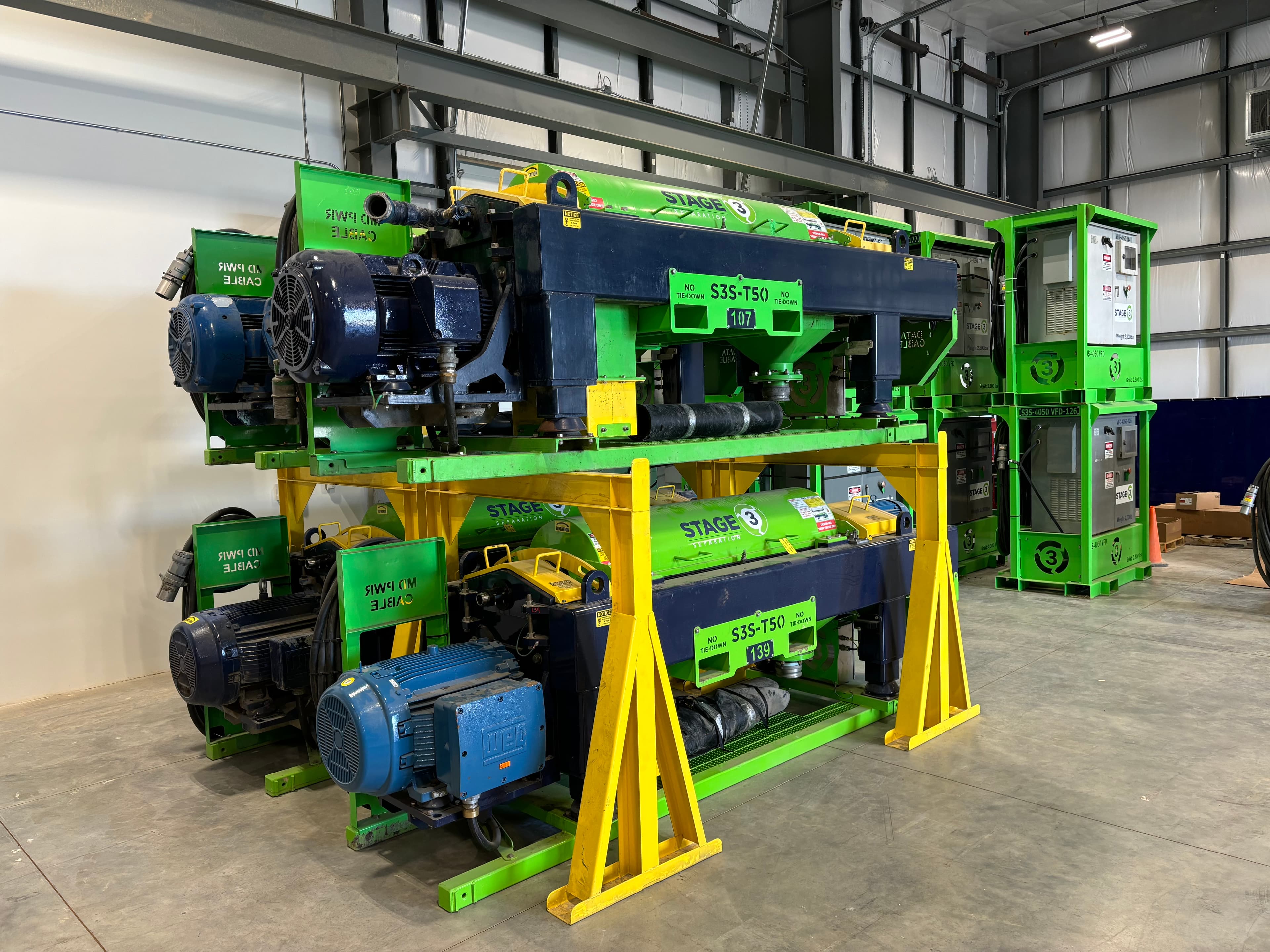
Condition and dewater the feed
The sludge was pumped to centrifuges while polymer was injected at the feed pump to bind fine particles and improve liquid-solid separation.
03
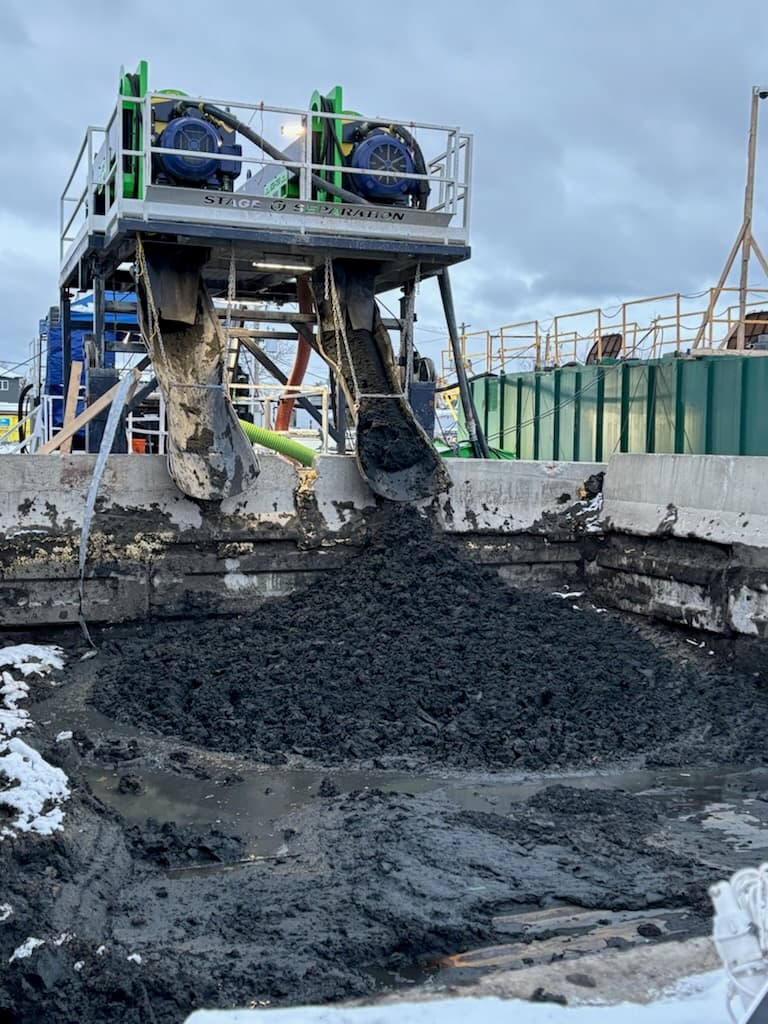
Discharge dry material
Dewatered solids discharged from the centrifuges into a shale bin for staging.
04
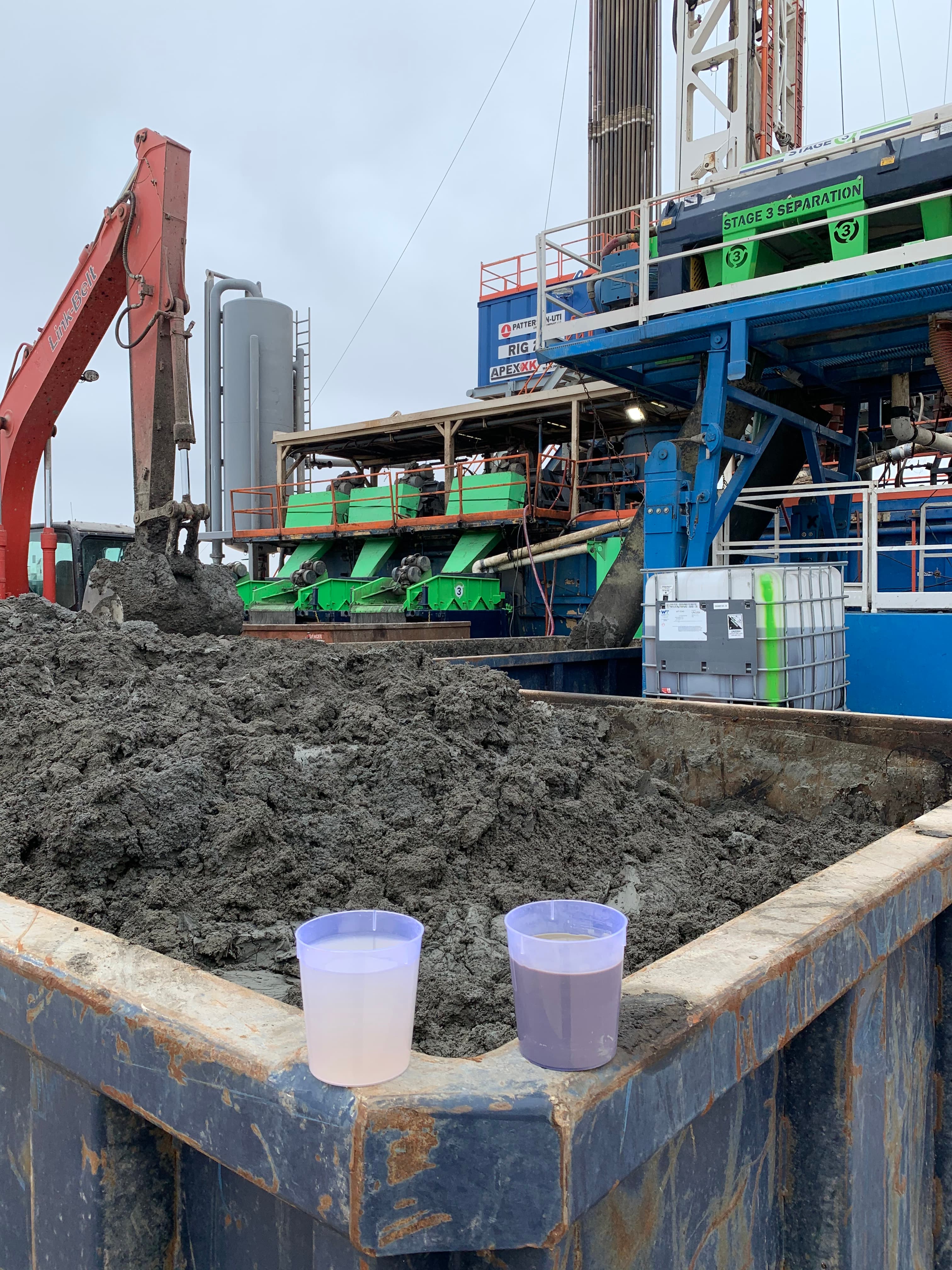
Return clean water to the loop
Separated water moved through the BOS III tank for reuse and polymer mixing before it was circulated back to the lagoon.
05
Load out dry solids
When the bin was full, a loader transferred the dry material to an end-dump truck for removal to disposal.
Work with S3S
S3S de-sludges lagoons without disturbing the base.
Tell us the lagoon or basin, the estimated volume, and the schedule. S3S will scope a treatment plan built to protect what is underneath.
What happens next
- A separation specialist reviews the material, the volumes and the site.
- We size the equipment and the crew against your schedule and the outputs you need.
- You get a configuration and a scope you can price the job against.