
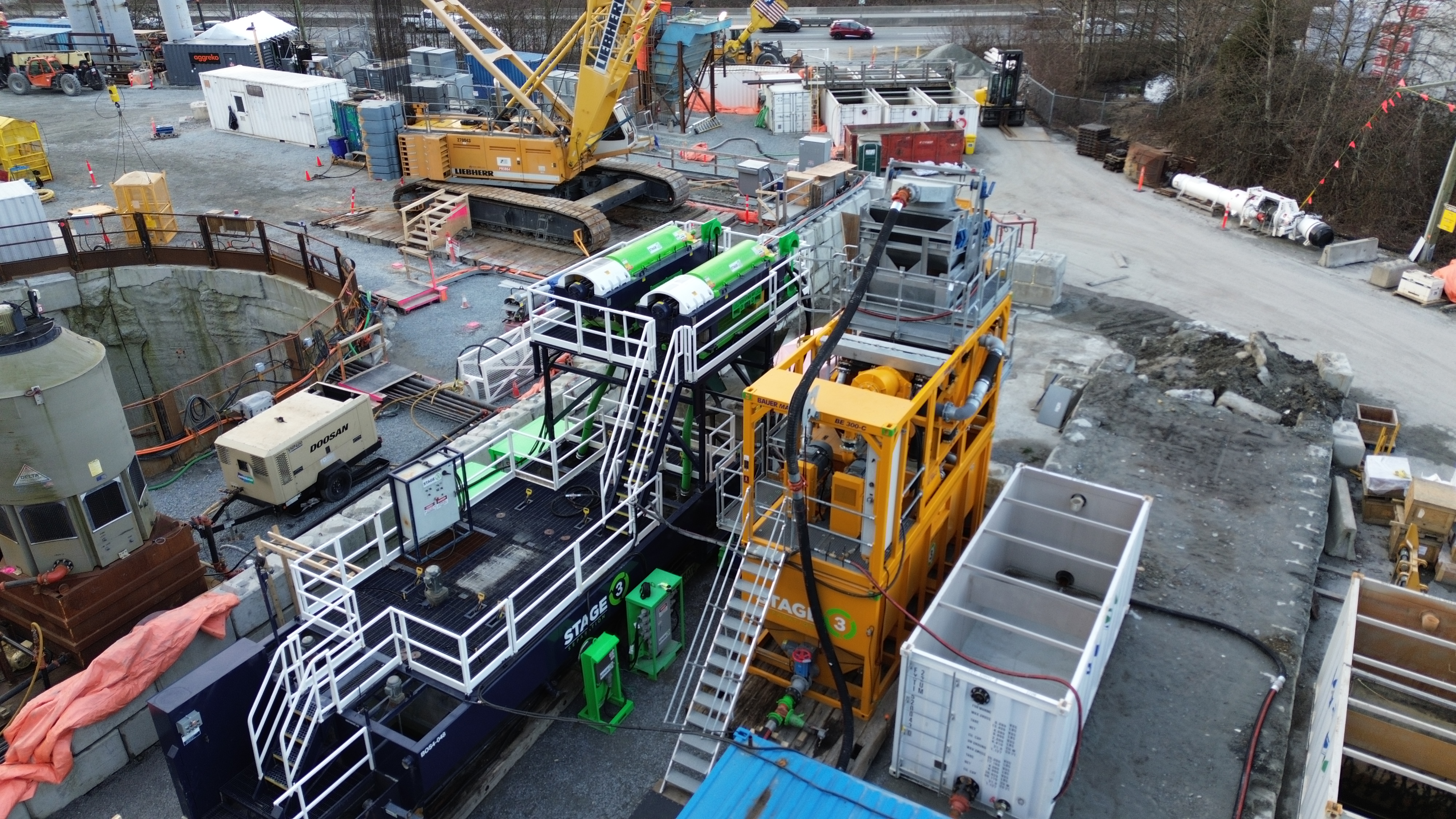
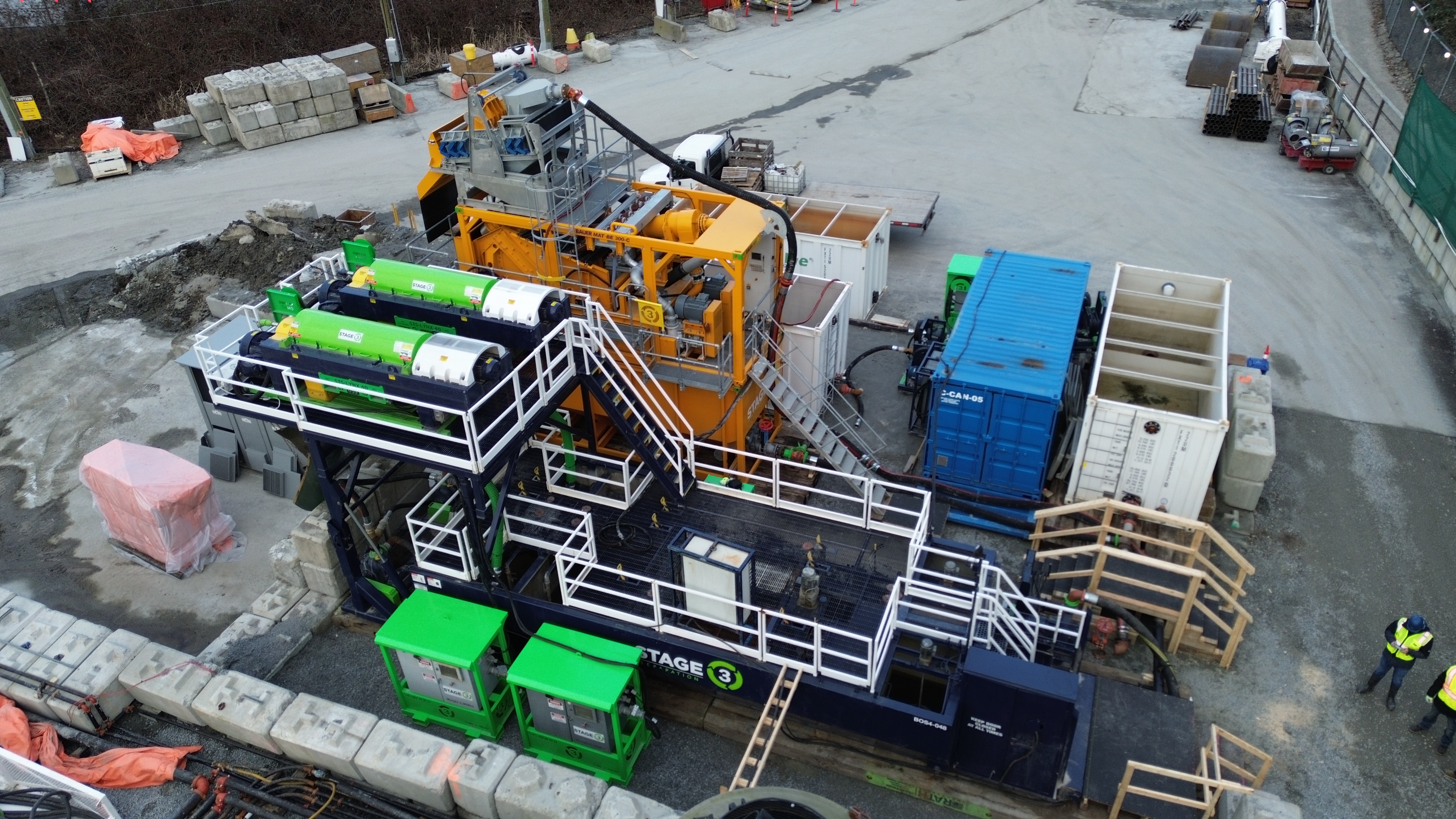
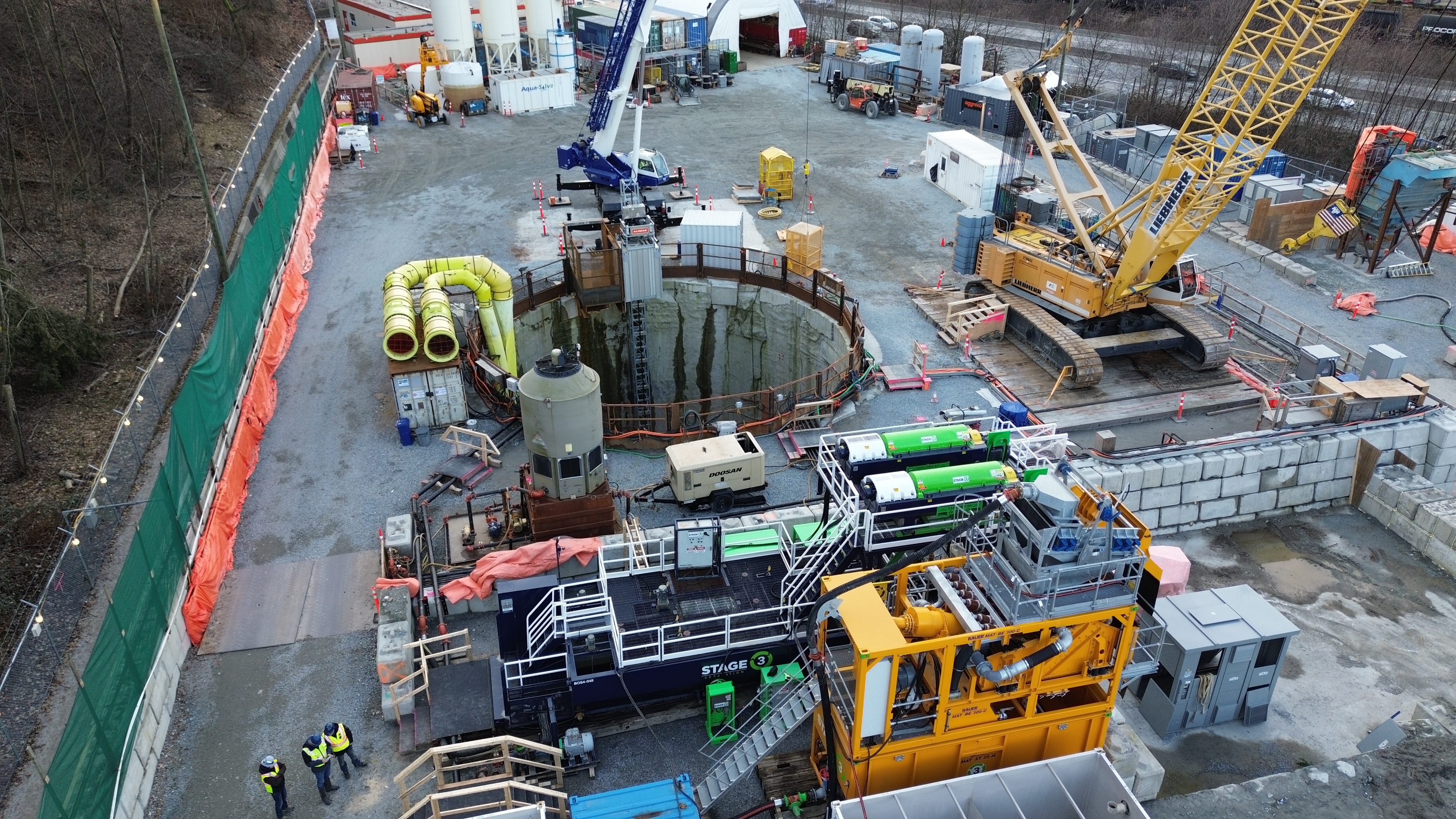
On the Gordie Howe International Bridge, our tank system and centrifuges recycled the polymer drilling fluid across all 33 drilled shafts so it could be reused instead of hauled off.
Deep Foundations & Ground Improvement
Keep the support fluid working. Keep the rig producing.
Stage 3 Separation (S3S) is your deep foundations and ground improvement slurry partner. We recycle bentonite and polymer support fluid, dewater jet grout backflow and drilled spoils on site, and keep the rig producing instead of waiting on a vacuum truck.
What on-site separation does for a foundations job
Fluid stays in service. Solids leave dry.
Settling pits and rental tank farms let support fluid thicken past reuse and turn spoils into a disposal bill. S3S brings the treatment plant to the shaft, keeps the bentonite and polymer working, and sends solids off dry and stackable.
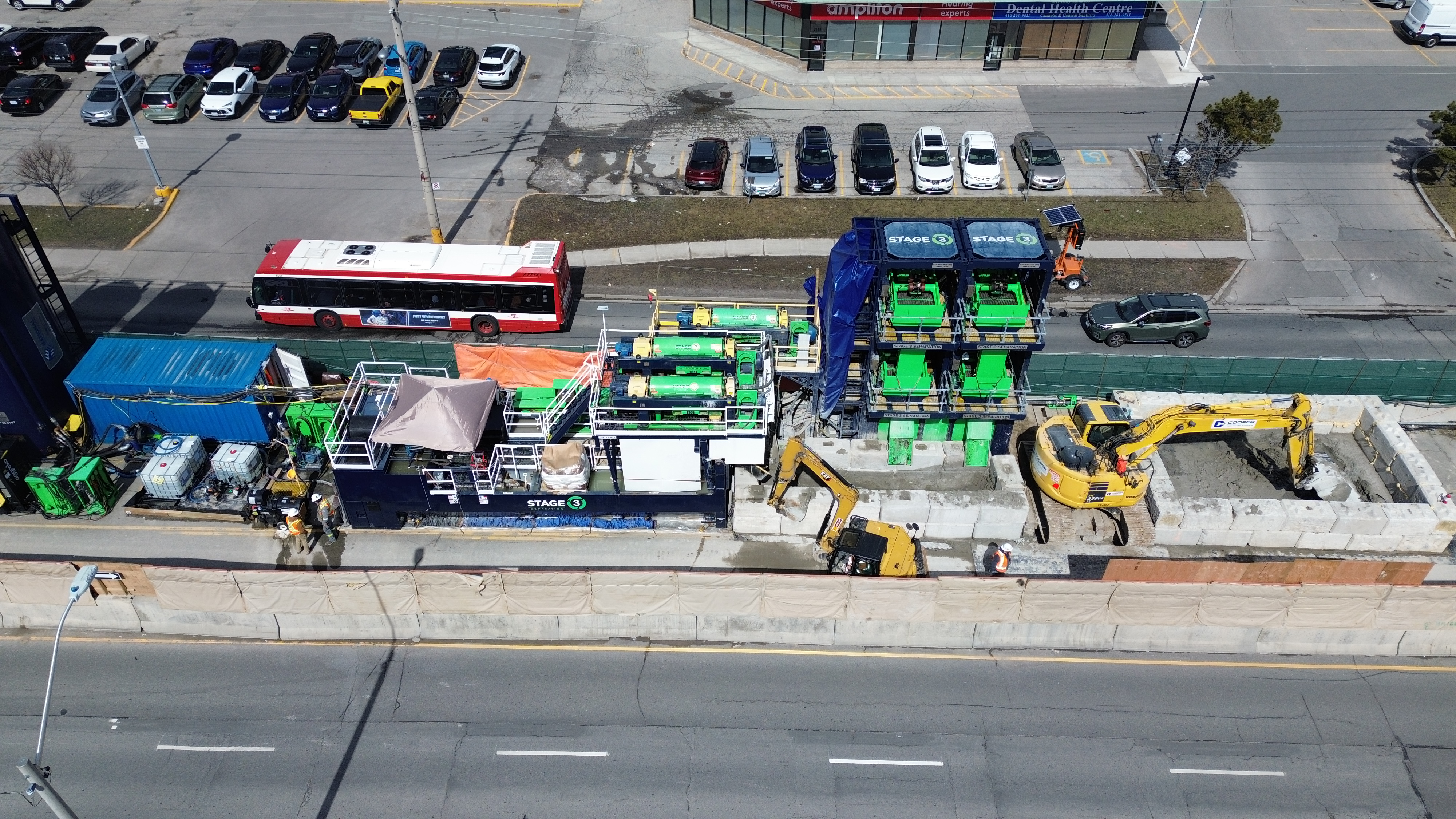
On the Toronto Eglinton Crosstown East tunnels, our mobile slurry treatment system turned jet grout backflow into roughly 1,120 m³ of clear water, reused on site and discharged to the sanitary sewer with no extra processing.
On-site dewatering cuts what leaves the gate. Slurry becomes dry solids and reusable water, so the volume you haul and dispose of drops sharply.
Three decades and more than 7,500 projects across energy, construction, industrial, municipal, and dredging. We've run into your slurry problem before.
How a job runs
Support fluid in. Reusable fluid and dry solids out.
Bentonite and polymer support fluid, jet grout backflow, and drilled cuttings come back to surface as a high-volume waste stream. S3S receives it, separates it in stages, and returns fluid you can pump straight back down the hole. One crew owns the whole loop.
01
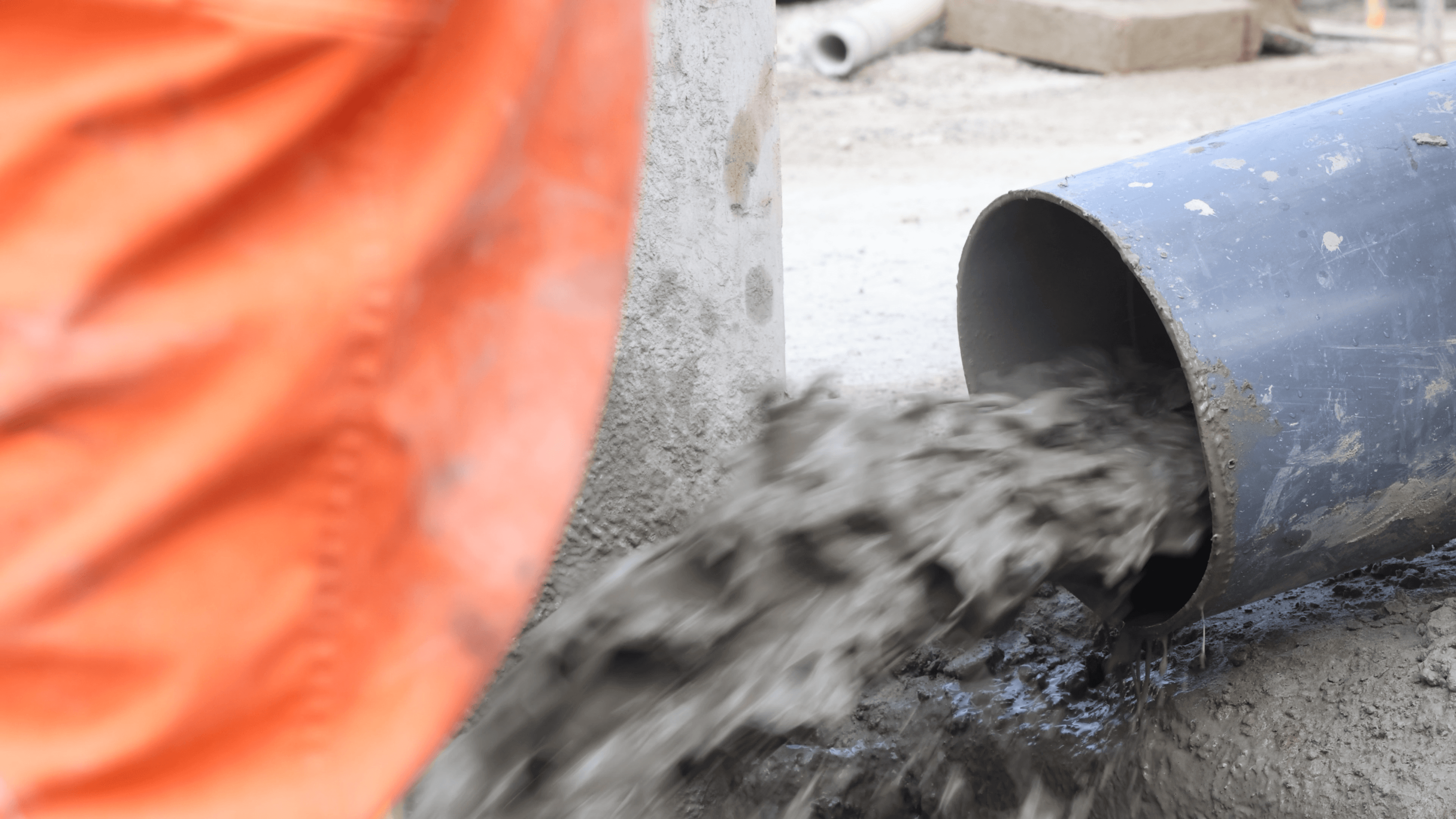
Receive the spoils
Backflow, support fluid, and cuttings are pumped straight from the shaft, panel, or grout column to the treatment system, so nothing sits in pits or waits on a vacuum truck.
02
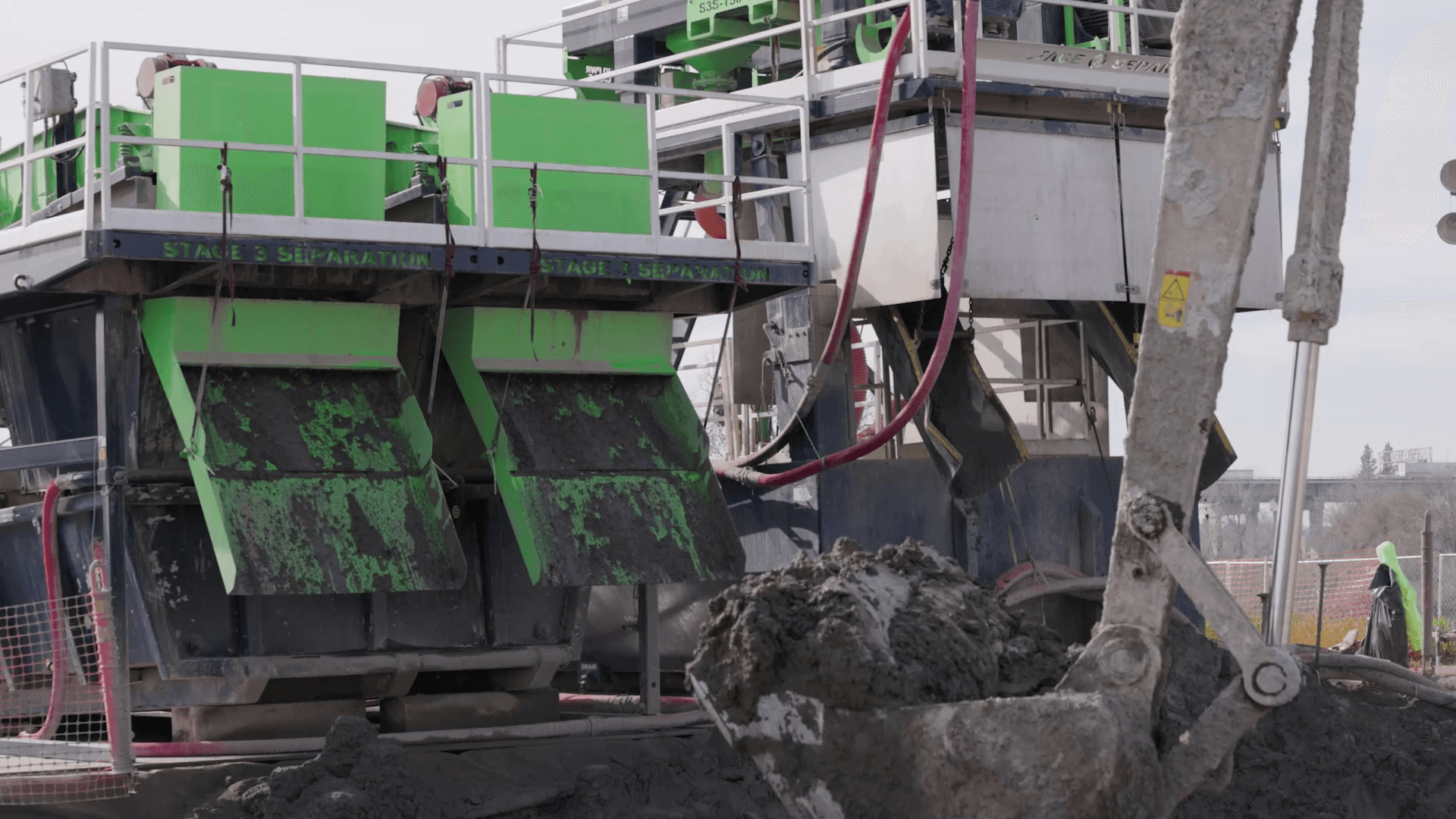
Separate and condition
Coarse solids like sand and gravel drop out first. Then centrifuges and site-tuned flocculation pull the fine solids from the slurry, with our operators dialing chemistry to the ground you're in.
03
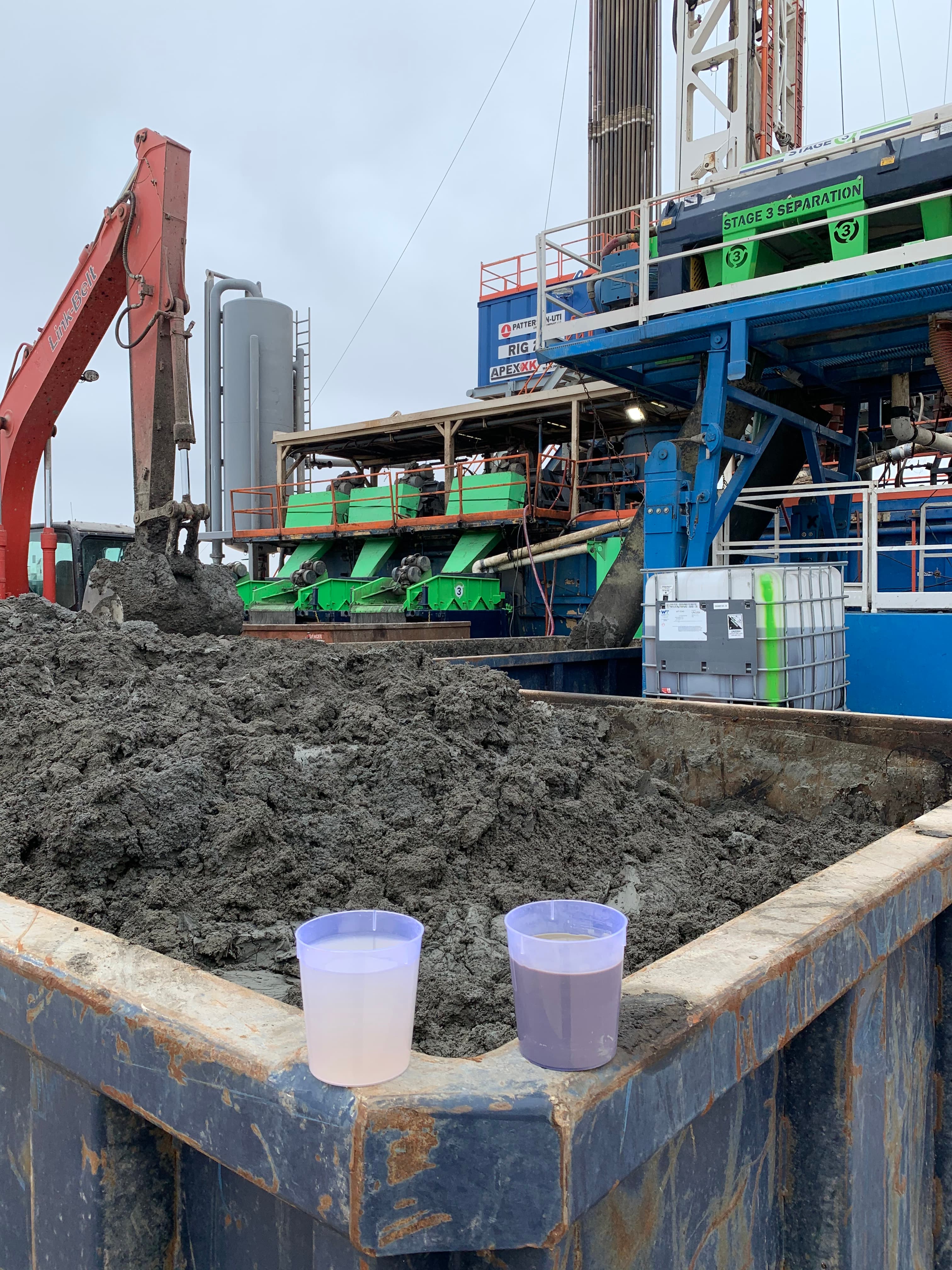
Reuse water, stack solids
Clear water goes back into the operation, to the sanitary sewer where permitted, or to disposal at a fraction of the volume. Solids leave dry, stackable, and ready to pass the paint-filter test.
The foundations advantage
No pits.
No lagoons.
No convoy of vac trucks.
Deep foundation work is measured in shafts per week, and the fluid loop is what sets the pace. S3S runs a compact, modular plant beside the rig so the support fluid comes back clean and the next pour is never waiting on it.
We're not a rental yard. We engineer the system around your slurry and run it ourselves. Count trucking, disposal, and downtime, and the job usually costs less.
Fits a congested site
On tight urban foundation sites with no room for pits or a rental tank farm, our mobile treatment system drops onto the footprint you already have and processes the backflow in place.
Cuts the trucking
Dry, stackable solids and reusable water mean far fewer loads on public roads, less traffic risk, and lower haul-off cost, not a settling pond feeding a fleet of vacuum trucks.
Recycles the support fluid
On the Gordie Howe bridge, recycling the polymer instead of hauling it saved roughly 160,000 gallons of fluid from disposal every two weeks and kept all 32 drilled shafts supplied.
One platform. Every foundation and ground improvement method.
01
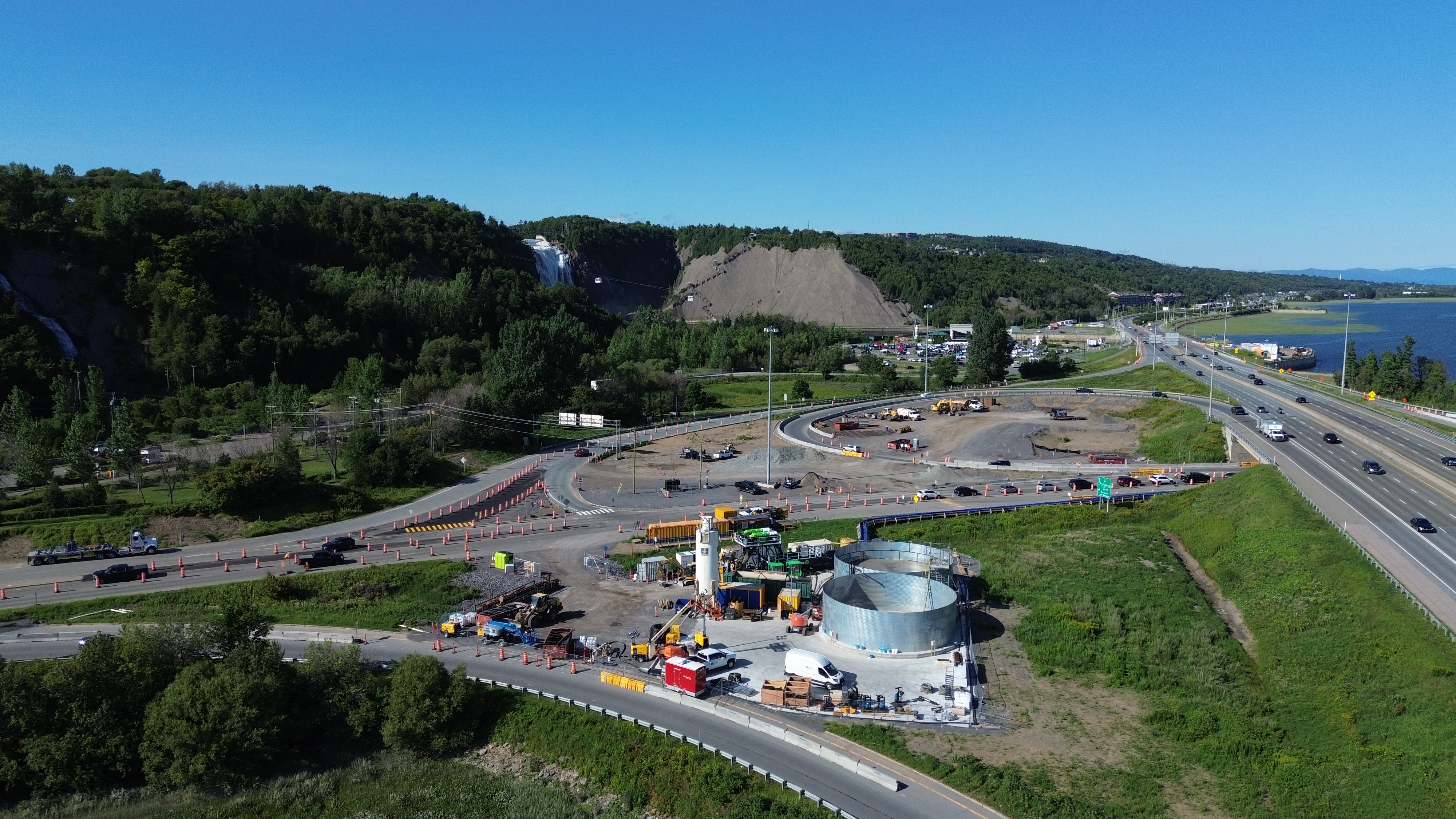
Tunneling & microtunneling
02
HDD & trenchless
03
Deep foundations & shafts
04
Jet grout & diaphragm walls
Built for support fluid
The equipment we bring to the site
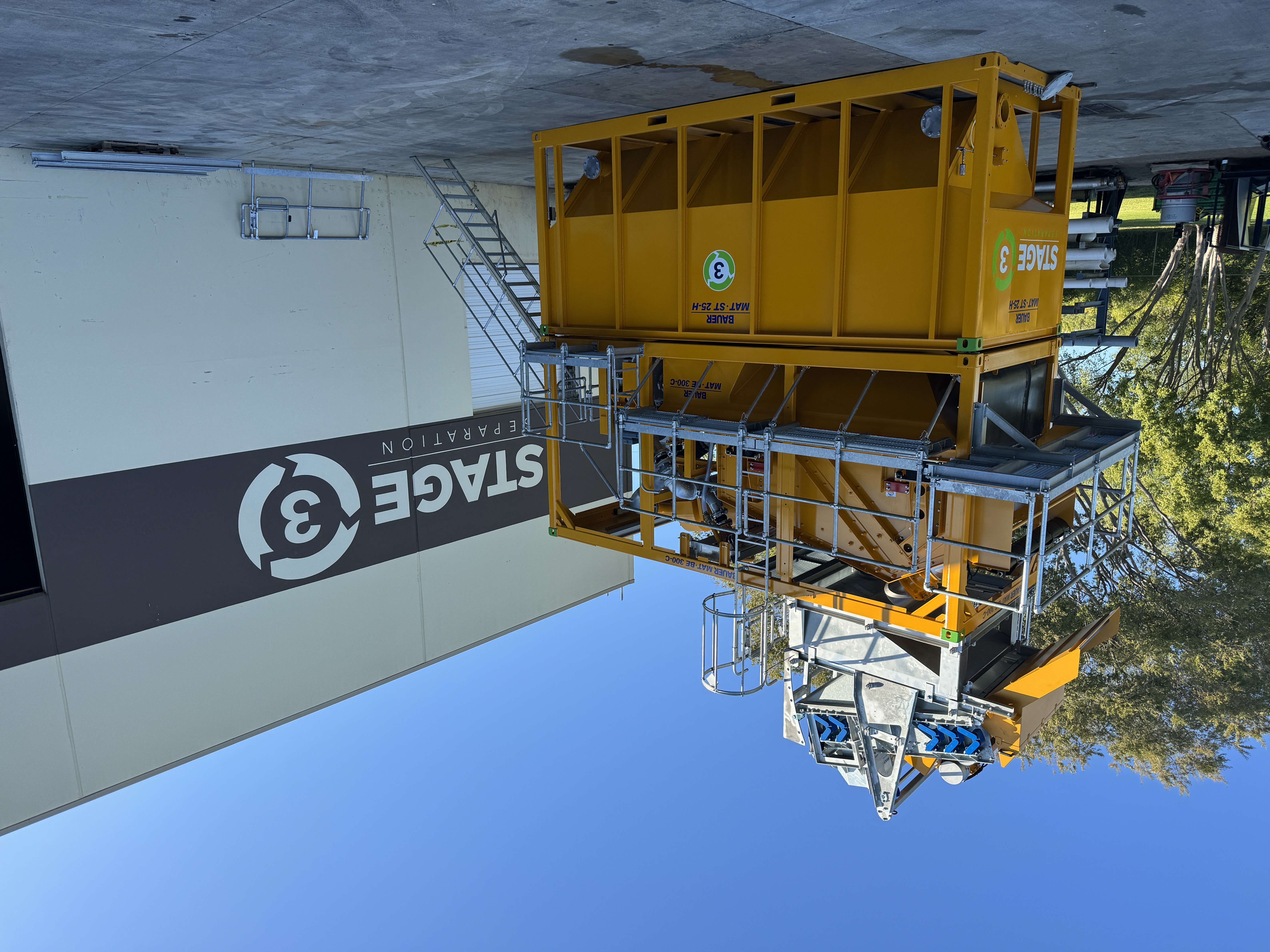
Every deployment is configured to the fluid, the flow rate, and the footprint. On deep foundations that usually starts with the BE-300 slurry plant, backed by centrifuges, tanks, and a lab-tuned chemistry program that keeps bentonite and polymer in spec.
BE-300 slurry treatment plant
A compact, container-framed desanding and dewatering plant built for construction, tunneling, and dredging. It handles high-volume slurry on a small footprint and integrates with our patented dewatering system for ultra-fine filtration.
- Capacity
- Up to 300 m³/hr, scalable in series
- Best fit
- Diaphragm walls, shafts, piling, jet grout
- Footprint
- Compact container frame
- Pairs with
- Patented dewatering system
Where we run and what we treat
Staged across North America. Close to the work.
S3S stages equipment and crews across the continent so the right plant is close to the work, not five days away. The same model runs everywhere: engineer the system, operate it on site, measure the result.
Houston, TXGulf Coast operations and support
Midland, TXPermian Basin equipment yard
Calgary, ABCanadian infrastructure coverage
North DakotaBakken field deployment
Slurry & diaphragm walls
Bentonite support fluid for secant, diaphragm, and slurry walls, desanded and recycled panel to panel instead of thickening into waste.
Piling, drilled shafts & caissons
Bored piles, drilled shafts, and caissons: polymer and bentonite support fluid recycled and drilled solids removed dry.
Jet grouting
Jet grout backflow separated into clear water and dry, stackable solids, even on sites with no room for a pit.
Cutter soil mixing & ground improvement
CSM and ground improvement spoils dewatered on site so the mixing rig keeps moving and haul-off stays off the critical path.
Proven on the
biggest infrastructure
jobs on the continent.
Case studies ↓
Gordie Howe International Bridge
On one of North America's longest bridges, our tank system and centrifuges recycled the polymer fluid across 33 drilled shafts. Reusing it instead of hauling it saved roughly 160,000 gallons from disposal every two weeks, and solids left dry and paint-filter clean.
Heavy civil, Detroit-Windsor
Toronto Eglinton Crosstown East Tunnels
In congested Midtown Toronto, with no room for pits, our mobile system turned jet grout backflow into dry, stackable solids and roughly 1,120 m³ of clear water, reused on site and discharged to the sanitary sewer. Waste handling costs dropped about 20%.
Trenchless, Midtown Toronto
On site in 24 hours
When a contractor calls, we can be rigged up and running within a day, because we stage ready equipment across the continent and service it before it's needed. For a Toronto job, that can mean trucking a plant hours from a nearby yard instead of days across the country.
Field operations
Recycle the fluid, don't dump it
Conventional rental tanks rely on gravity, take days for solids to settle, and eventually thicken the polymer past reuse, doubling the fluid you buy and the tanks you stage. Mechanical separation keeps bentonite and polymer support fluid in service across the whole project.
Fluid recycling
Slurry & diaphragm walls
For wall contractors. We keep bentonite support fluid in spec across every panel so you buy less fluid and stage fewer tanks. Whatever the dig, we've handled the slurry, and we show up ready to run.
See how we work→Foundation applications
Every deep foundation method makes the same trade. Support fluid holds the excavation open, and the solids it picks up are what eventually take it out of service. S3S keeps the fluid working and sends the spoils off dry.
Slurry & diaphragm walls
A diaphragm wall advances only as fast as the support fluid comes back clean. Bentonite picks up sand and fines on every panel, and once it thickens past spec you are buying new fluid and staging more tanks to hold what you cannot use. S3S desands and dewaters the slurry beside the trench so the same bentonite works panel after panel. Coarse sand drops out at the scalping and cyclone stage. Centrifuges pull the fines that gravity settling never drops.
30 micronsParticle capture through BE-300 double-cyclone desanding
Piling
Bored piles run on support fluid the same way a drilling rig does. The fluid holds the hole open and carries cuttings to surface, and it stops working once the solids load climbs. S3S receives the return, strips the drilled solids, and sends the fluid back down. The rig keeps producing and the spoils leave dry instead of filling a pit you do not have room for.
Jet grouting
Jet grout backflow is concrete that has not set yet. Process it fast enough and it separates cleanly. Miss the window and the tanks, lines, and pumps set up solid, which makes this the least forgiving spoil on a foundations site. S3S runs a mobile tank, centrifuge, and flocculation system on the backflow and keeps it moving.
On the Toronto Eglinton Crosstown East tunnels, that configuration produced 1,120 m³ of clear water that met provincial discharge criteria and went straight to the sanitary sewer. Total disposal cost dropped by about 20%.
1,120 m³Clear water to sanitary sewer, Toronto Eglinton Crosstown East
Cutter soil mixing (CSM)
CSM spoils behave like jet grout backflow. They carry cement, they stiffen if they sit, and they arrive faster than a settling pit can take them. S3S treats cementitious ground improvement spoils as their own material problem: receive them quickly, screen out what should never reach a pump, and separate before the mix goes off. The tank, centrifuge, and chemistry package we run on jet grout applies here.
Drilled shafts & caissons
Bored shafts and caissons hold open on polymer or bentonite, and the fluid is the expensive part of the operation. On the Gordie Howe International Bridge, S3S ran BOS tanks and two large-bowl centrifuges with a technician on site, processing roughly ten 18,000-gallon tanks of polymer slurry a day. The clays and silts came out, the polymer went back to the shafts, and vacuum trucks were needed only for final tank cleaning.
10 tanks a day18,000-gallon polymer tanks recycled, Gordie Howe International Bridge
Buyer questions
Deep foundation slurry dewatering, answered
Construction slurry is a liquid waste of water, soil, and additives like bentonite and polymer, from drilling and excavation. Traditionally it's pitted or hauled off in vacuum trucks at high cost. S3S dewaters it on site into dry, stackable solids and clear water you can reuse or discharge.
Vac-truck haul-off is expensive, slow, and hard to stage on congested sites, and disposal can run 15-20% of a project's value. On-site dewatering cuts the volume leaving the gate and takes disposal logistics off the critical path, so the dig keeps moving.
Yes. We treat jet grout backflow, bentonite and polymer support fluid, HDD mud, and TBM spoils. Where the fluid can be reused, we recycle it, as on the Gordie Howe bridge. Where it can't, we separate it into clear water and dry solids, as on the Toronto Eglinton tunnels.
The BE-300 slurry plant is built into a compact container frame and is modular, so it fits the footprint you already have, no lagoons, no pits, no separate equipment yard. In Midtown Toronto we ran it on a congested site with minimal space.
To the specification your project requires, clean enough to reuse in the operation, discharge to the sanitary sewer where permitted, or meet your disposal criteria. On the Toronto tunnels, recovered water went to the sanitary sewer with no additional processing.
Our systems are modular, so we add units for higher volume or scale down for less. Very short or very small jobs can be outweighed by mobilization and trucking, so share the scope and we'll give you a straight assessment.
The slurry doesn't
have to slow the dig.
S3S turns bentonite and polymer support fluid, jet grout backflow, and drilled spoils into reusable fluid, clear water, and dry, stackable solids, on the footprint you already have.
Less trucking. Less disposal. Less coordination. More control over what leaves your site.
Diaphragm and slurry walls, piling, drilled shafts and caissons, jet grouting, and cutter soil mixing, across North America. One team owns the whole loop.