
Blog · Construction
What Is Construction Slurry and How Is It Managed?
By Stage 3 Separation ·
What Construction Slurry Is Made Of
Construction slurry is a liquid waste stream generated during horizontal directional drilling, auger cast piling, slurry wall construction and similar excavation work. The base is water, usually 95 to 97 percent of the mixture. The rest is a blend of engineered additives mixed in before drilling starts.
Bentonite clay is the main thickening agent, typically making up 2 to 4 percent of the mixture. It gives the fluid the viscosity needed to stabilize a bore hole and carry cuttings out of it. Carboxymethyl cellulose (CMC) adjusts fluid properties and helps the mixture hold cuttings in suspension. Polyacrylamide does similar work, improving how well the fluid carries solids without breaking down. Soda ash controls pH and water hardness so the other additives perform consistently.
That is the fluid as it goes into the ground. What comes back out is different.
What Happens to Slurry Once Drilling Starts
As drilling progresses, the engineered fluid picks up drilling cuttings, native soil, and whatever else the bore encounters, sometimes including contaminated material or heavy metal ions from subsurface formations. A single project can generate slurry with widely different characteristics depending on the ground it passes through: a bore that starts in sand and moves into clay or rock produces a waste stream that changes composition as the job goes.
That variability matters because disposal requirements are tied to what is actually in the slurry, not what was mixed at the start. Two loads from the same job site can require different handling.
Why Disposal Is Expensive
Before a load can go to a landfill, it has to pass the paint filter test, a standard check confirming that no free liquid will drain from the waste. Material that fails has to be solidified with additives or trucked to a facility that accepts liquid waste, both of which cost more than a straightforward solid-waste load.
Weather adds to the cost. Rain interferes with spreading and solidification, cold slows down chemical treatment, and wet ground makes hauling heavy, water-laden loads more difficult. Any of these can hold up a project waiting for conditions or capacity to accept the waste, which adds equipment rental and labor cost on top of disposal fees.
Hauling water off a job site is also just inefficient. Slurry that is mostly water means most of what gets trucked to a landfill is water weight, and every gallon that leaves the site as liquid waste is a gallon that could have been treated and reused instead.
Onsite Dewatering Changes the Equation
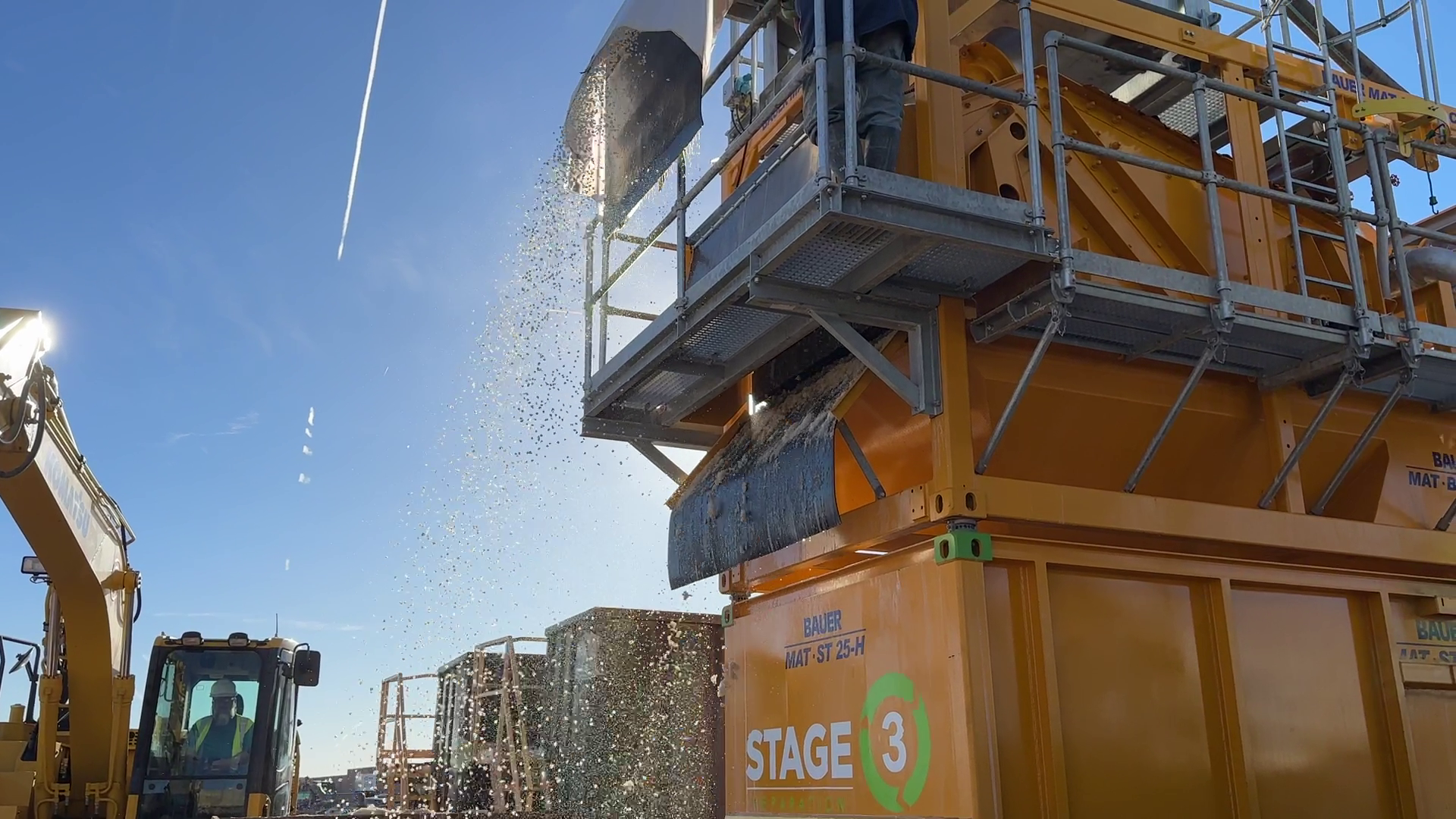
Instead of hauling slurry to a disposal facility, it can be treated where it is generated. Stage 3 Separation runs the BE 300-C, a mobile slurry treatment system built for construction sites, that separates a slurry stream into clean water and dry solids without needing a permanent settling pond or basin.
The process uses chemical treatment to aggregate fine particles into larger flocs, followed by centrifuge separation to pull the solids out of the liquid. What comes out the other end is water that can go back into the drilling operation and a solid material that can be handled and disposed of as a stackable solid rather than a liquid, which is what the paint filter test and most landfills require anyway.
Because the unit operates on the site itself, there is no slurry sitting in tanks waiting for a truck, and no truck hauling water off site that did not need to leave. Recovered water goes back into the active drilling fluid system, cutting into how much fresh water and fresh additive the job needs to bring in.
What This Means for Project Planning
Slurry management works best when it is planned before drilling starts, not after tanks are already full. Knowing the expected soil conditions, drilling method and volume lets a contractor size the right equipment and lock in disposal logistics ahead of time rather than reacting to a full tank on a Friday afternoon.
Onsite treatment does not eliminate the need to manage waste correctly. Solids still have to be tested and disposed of according to what they contain, and the process has to be run by people who understand how to adjust chemical dosing as the slurry composition changes through the job. What it does is cut down the volume of material that needs to leave the site as liquid waste and the number of truck trips required to move it.