
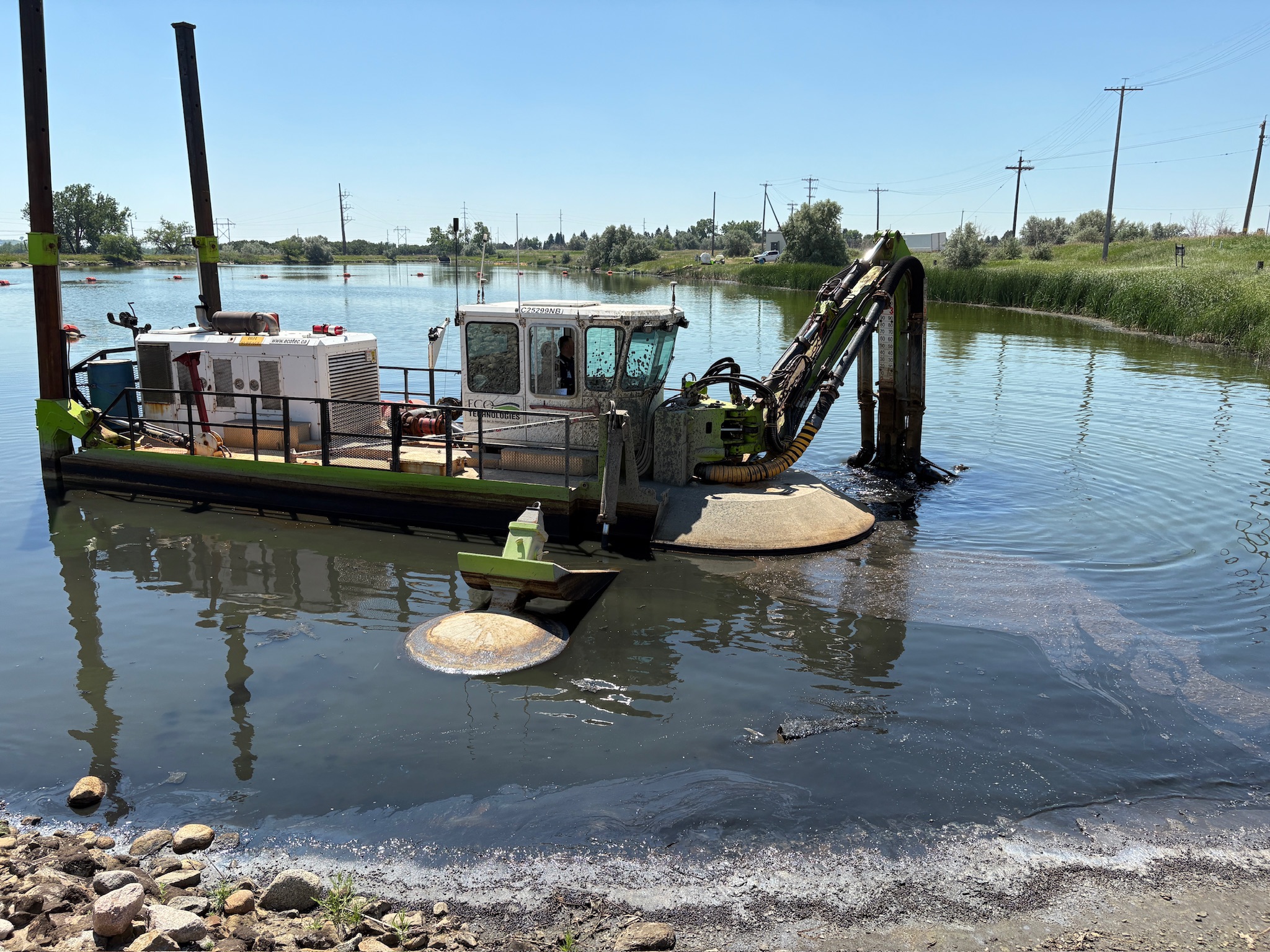
Expected production, total volume, solids content, debris, particle size, density, chemistry, and peak conditions determine whether a treatment train can stay aligned with the dredge.
Dredging waste management economics
Do not price the dredge spoil twice.
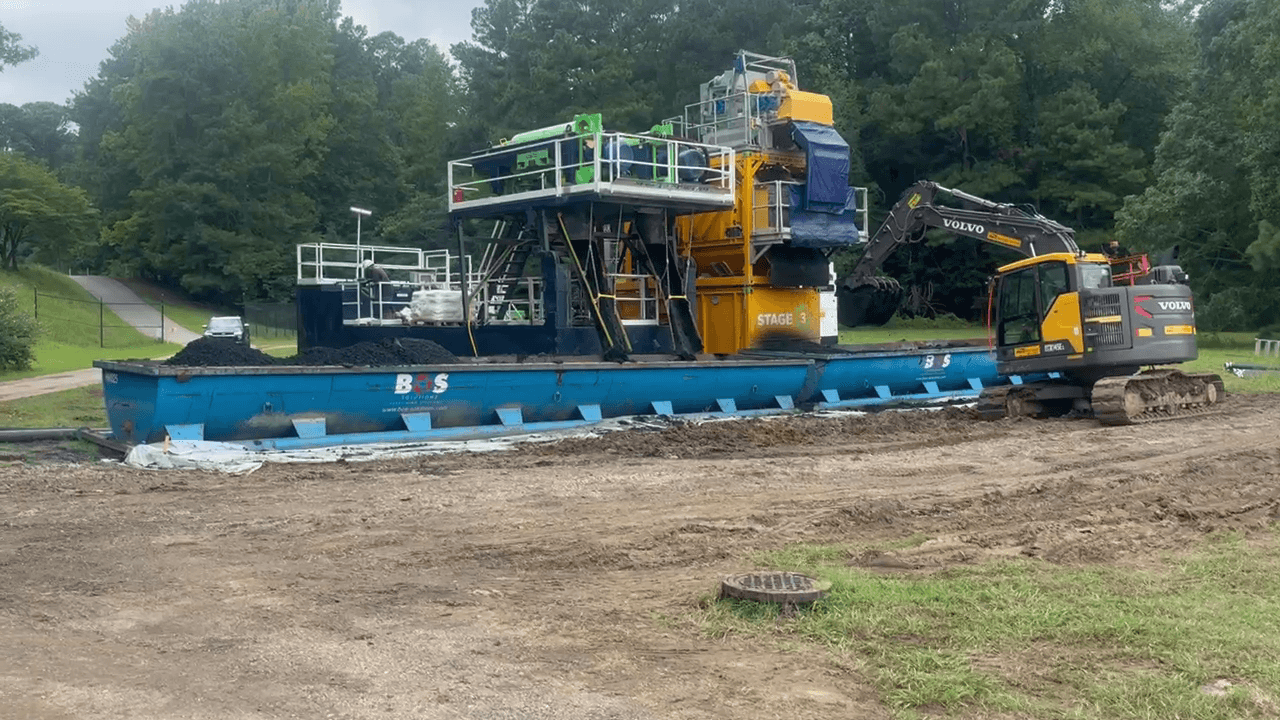
Removing sediment creates a material-management decision: move wet slurry to the next destination, or receive and separate it near the work before selected streams move on. Neither route wins by default. The useful comparison follows the entire path: dredge production, transfer, trucking or pipeline logistics, receiving, treatment, water management, solids handling, testing, destinations, and responsibility at every handoff. Stage 3 Separation (S3S) helps project teams test whether an on-site processing scope is technically and commercially credible beside the direct-haul baseline. Bring the material data, planned outputs, site constraints, and schedule. We will help make the assumptions visible before the estimate becomes a field problem.
What drives the comparison
Economics follow the material path.
A defensible comparison does not start with a percentage reduction. It starts by defining what is being moved, where it can go, and what each route has to accomplish.
Truck or barge access, route constraints, loading windows, transfer distance, receiving hours, and contingency capacity can matter as much as a unit price.
The liquid stream and concentrated solids each need a planned next step, criteria, testing approach, and responsible party. Separation alone does not establish reuse, discharge, or acceptance.
On-site processing needs a workable area, access, utilities, containment, staging, safe loading, and enough duration to evaluate mobilization and operation fairly.
On-site versus haul-off
Make each option carry its real work.
Direct haul-off may be the practical baseline for a small, brief, remote, highly variable, or severely space-constrained project. On-site processing warrants closer review when a sustained dredging scope, constrained transport, a suitable process area, and defined output pathways can support a controlled treatment operation.
Do not reduce the baseline to a truck rate
The haul-off side includes loading, transport, waiting, receiving hours, fees, material condition, testing, documentation, contingency, and the effect of interruptions on dredging production. The treatment side includes mobilization, receiving, surge capacity, process equipment, utilities, operators, water and solids management, sampling, loadout, and demobilization. A comparable estimate makes both lists visible.
Let duration carry its weight
Heavy, temporary equipment has real mobilization and demobilization cost. A short scope can be a poor fit even when separating material sounds attractive. A longer or higher-volume program may justify an engineered comparison, but it still has to clear the site, feed, and destination tests.
Treat transport as an operating constraint
The question is not only how far material travels. It is whether trucks, barges, loading points, roads, gates, labor windows, and the receiving destination can keep pace with the dredge. On-site processing can alter the material that moves next; it also adds its own deliveries, footprint, handling, and operating interfaces.
Define each destination before selecting equipment
Water may be retained for a project-defined next step, treated further, or routed only as authorized. Concentrated solids may require sampling, conditioning, staging, transport, further treatment, or an approved destination. The owner, applicable authorities, and receiving party set those requirements; a separation package does not create them.
Price uncertainty explicitly
Unknown feed conditions, undefined water routes, an unconfirmed solids destination, or unclear scope ownership are not minor notes. They are the inputs most likely to make two proposals look comparable when they are not. Mark assumptions, identify the party closing each gap, and price contingency deliberately.
Build a comparable estimate
Put the same cost buckets on both routes.
Use the direct-haul plan as a real baseline and the on-site plan as a complete operating system. Then ask the same question of each option: who performs the work, what must be available, what can interrupt it, and what proves the next handoff is allowed?
StageCut PointRoleOutput
Feed and productionWhat reaches the handoff, and when?Compare dredge method, average and peak flow, total volume, debris, solids, and variability.Production estimate plus available samples or characterization
Transfer and transportHow does material move to its next step?Compare pipeline, barge, truck, loading, route, distance, hours, queues, and contingency.Site and route plan with receiver operating limits
Site-side operationCan the treatment scope run continuously?Compare footprint, access, containment, tanks, power, water, staffing, maintenance, and weather.Layout, utilities, access plan, and operating assumptions
Liquid pathwayWhat happens after separation?Compare storage, testing, recirculation, further treatment, authorized routing, and responsibility.Defined criteria, sampling plan, and route owner
Solids pathwayWhat does the receiving destination require?Compare dewatering target, staging, testing, loadout, transport, and acceptance coordination.Destination criteria and receiving-party confirmation
Scope and riskWho owns each interface?Compare dredging, processing, trucking, disposal, permits, documentation, and third parties.Proposal responsibility matrix and exclusions
The treatment side of the comparison
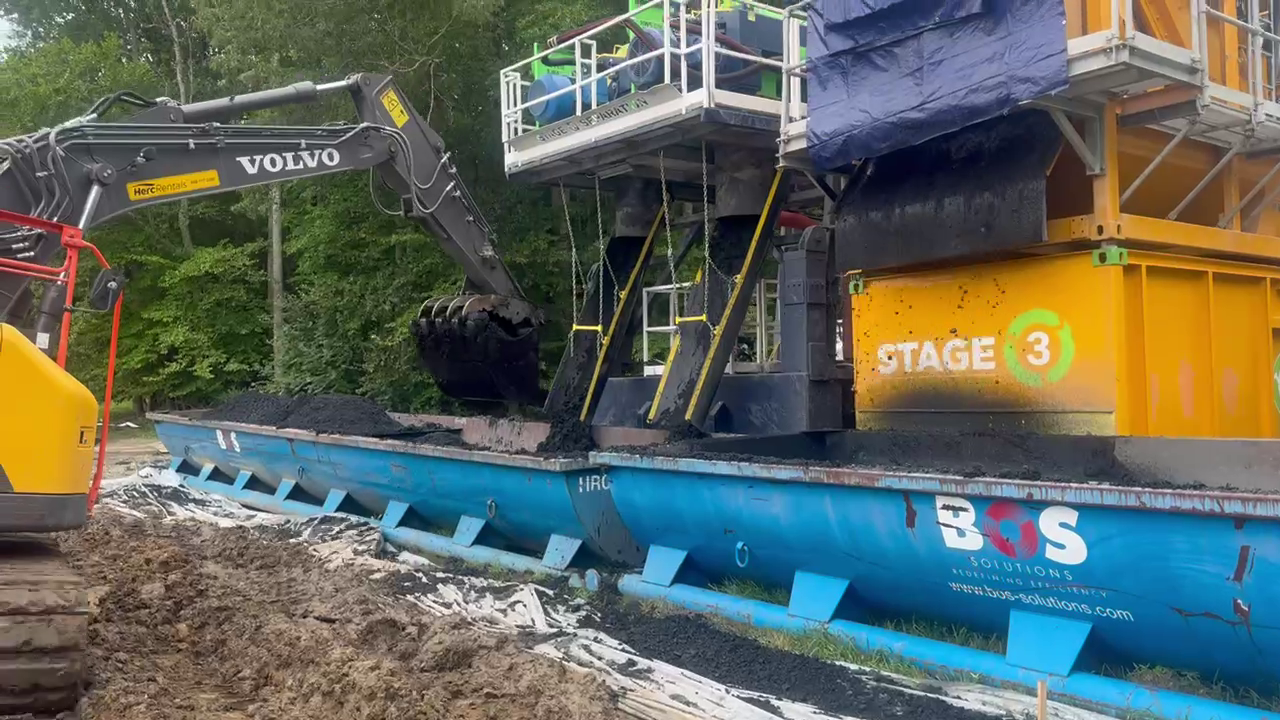
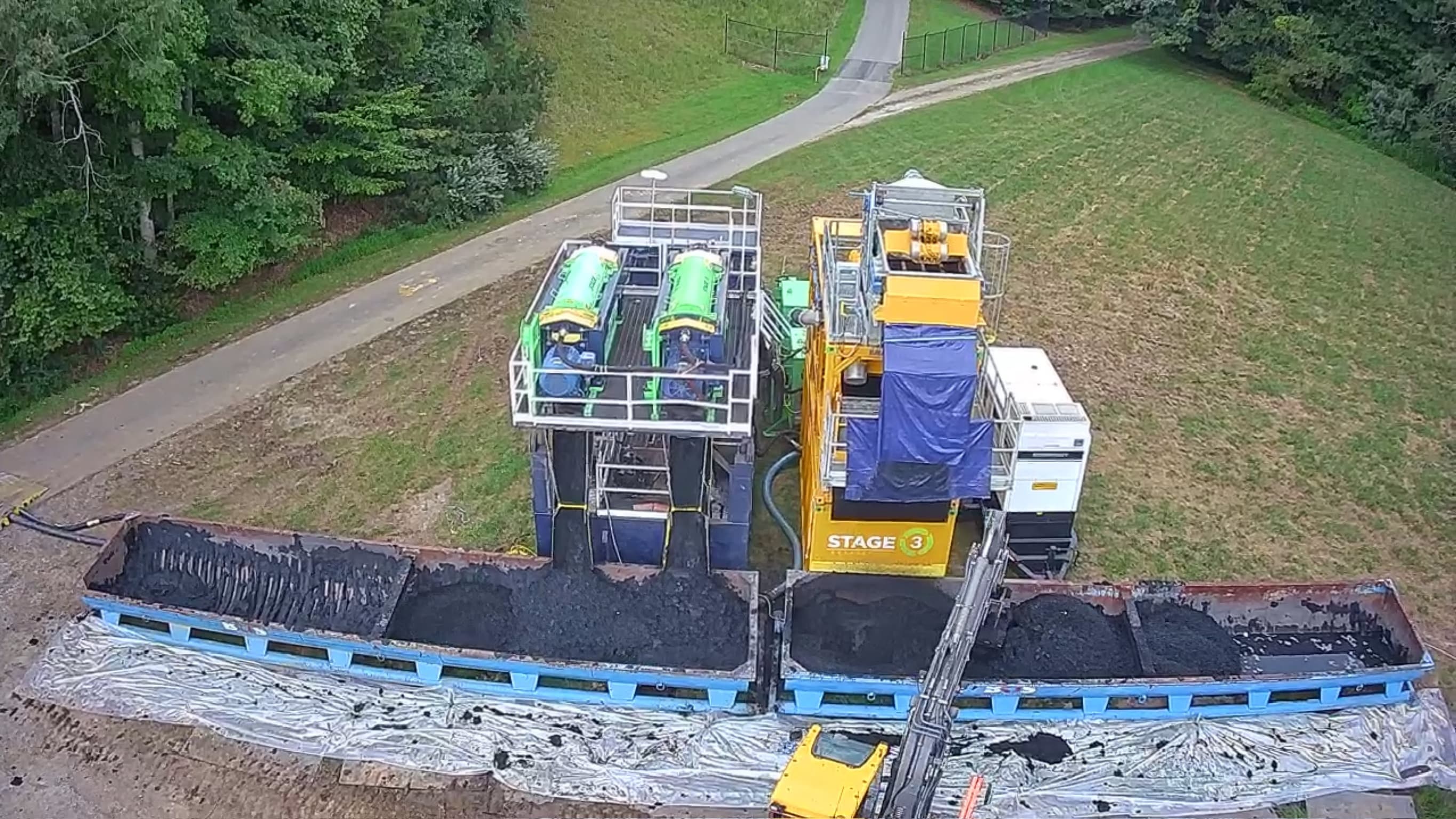
The treatment side runs on an engineered process sized to the material.
The exact train follows the material, the production rate, the site, and the defined outputs. These stages explain the work an on-site scope must actually own.
Stabilize the feed before it becomes a bottleneck.
Receiving tanks, pumps, and transfer controls can create a more stable feed when dredge production shifts. Their design has to account for peak flow, storage, debris, access, cleaning, and the space needed to keep the dredge from waiting on the plant.
- Review
- Average and peak feed
- Plan
- Surge capacity and transfer
- Account for
- Debris and cleaning access
- Protect
- Dredge production continuity
Five moves to a useful review
Turn the present haul plan into a fair alternative analysis.
A project review converts uncertainty into visible assumptions before procurement, while the plan can still change.
01
Map the current route
Document the dredging method, production expectation, loading point, transport method, receiver, fees, operating hours, and known constraints. Treat it as a baseline, not a placeholder.
02
Characterize the material
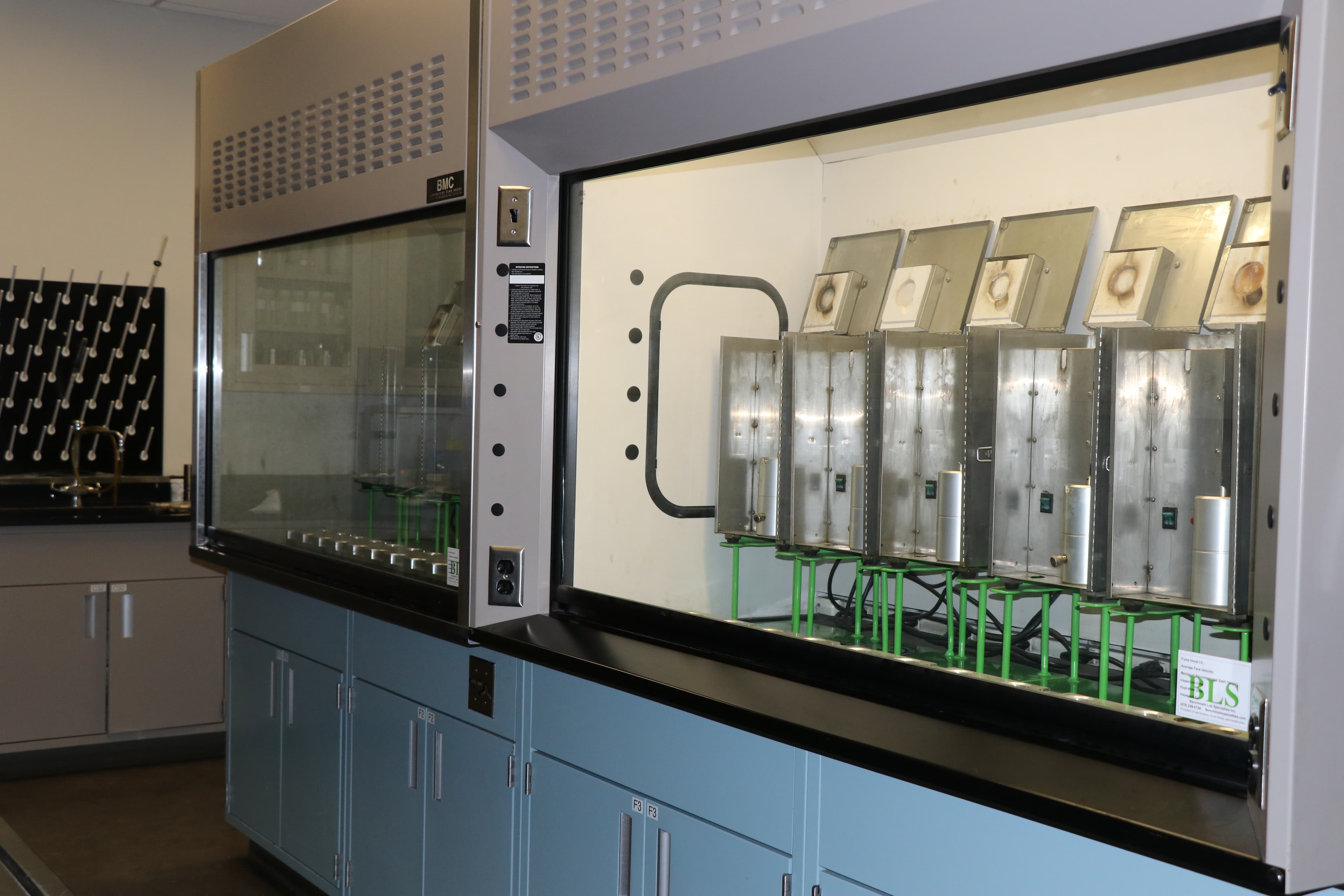
Share available sediment data, representative samples, debris observations, particle-size information, chemistry, and known contaminants. Identify what is measured and what is assumed.
03
Set both output pathways
Define the anticipated liquid and solids routes, required criteria, sampling, storage, receiving-party requirements, and the party responsible for each decision.
04
Test the site and operating window
Review footprint, access, elevations, distance from dredge, utilities, containment, traffic, noise limits, weather, hours, safety interfaces, and loading space. An on-site option has to fit the actual worksite.
05
Price responsibility, not just equipment
Compare mobilization, operation, staffing, treatment stages, water management, solids handling, trucking, testing, documentation, demobilization, third-party work, and exception handling. State what S3S owns and what remains with the owner, dredging contractor, transporter, laboratory, regulator, or receiving party.
Questions before award
Settle the comparison before it reaches the field.
No. Cost depends on the feed, total volume, duration, site, route, receiver, processing need, labor, utilities, testing, and risk at each handoff. A direct-haul plan can be the practical option for some projects. S3S can compare the material paths, but a project-specific estimate rather than a generic savings percentage determines the result.
Comparing one plant day rate to one truck rate. A useful comparison includes every material move and every operating requirement: mobilization, receiving, storage, transport, treatment, labor, testing, site access, destination requirements, loading, documentation, and demobilization.
Not necessarily. An on-site system can change the streams that need to move next, but concentrated solids, screenings, spent materials, or liquid may still require transport. The project plan must establish each route and the responsible party.
No. Dewatering changes physical handling; it does not remove contaminants or create acceptance. Characterization, applicable requirements, receiving-facility criteria, testing, transportation rules, and project approvals still govern the destination.
Only when the project has a defined pathway and the responsible parties establish the required criteria and authorization. Separation may be one part of that pathway, but it does not by itself make water suitable for reuse, discharge, or any particular destination.
No. On a dredging project S3S may work as the material-processing partner or support a broader scope with other providers. The proposal must identify who owns dredging, access, permits, trucking, disposal, testing, documentation, and third-party coordination before proposals are compared.
Share the project location, source area, estimated volume, dredge method and production, current haul or receiver approach, available samples, water and solids pathways, required criteria, site plan, access, utilities, schedule, operating hours, and the work packages S3S is expected to own. Identify unknowns; they are often the right place to begin.
Compare before you mobilize
Bring the material path, not just the truck quote.
S3S will review the dredge interface, current haul plan, material data, site-side treatment plausibility, output pathways, and scope boundaries so your team can decide which assumptions deserve further engineering before award.
What happens next
- A separation specialist reviews the sediment, the dredge production and the site.
- We size the equipment and the crew against your schedule and the outputs you need.
- You get a configuration and a scope you can price the job against.